
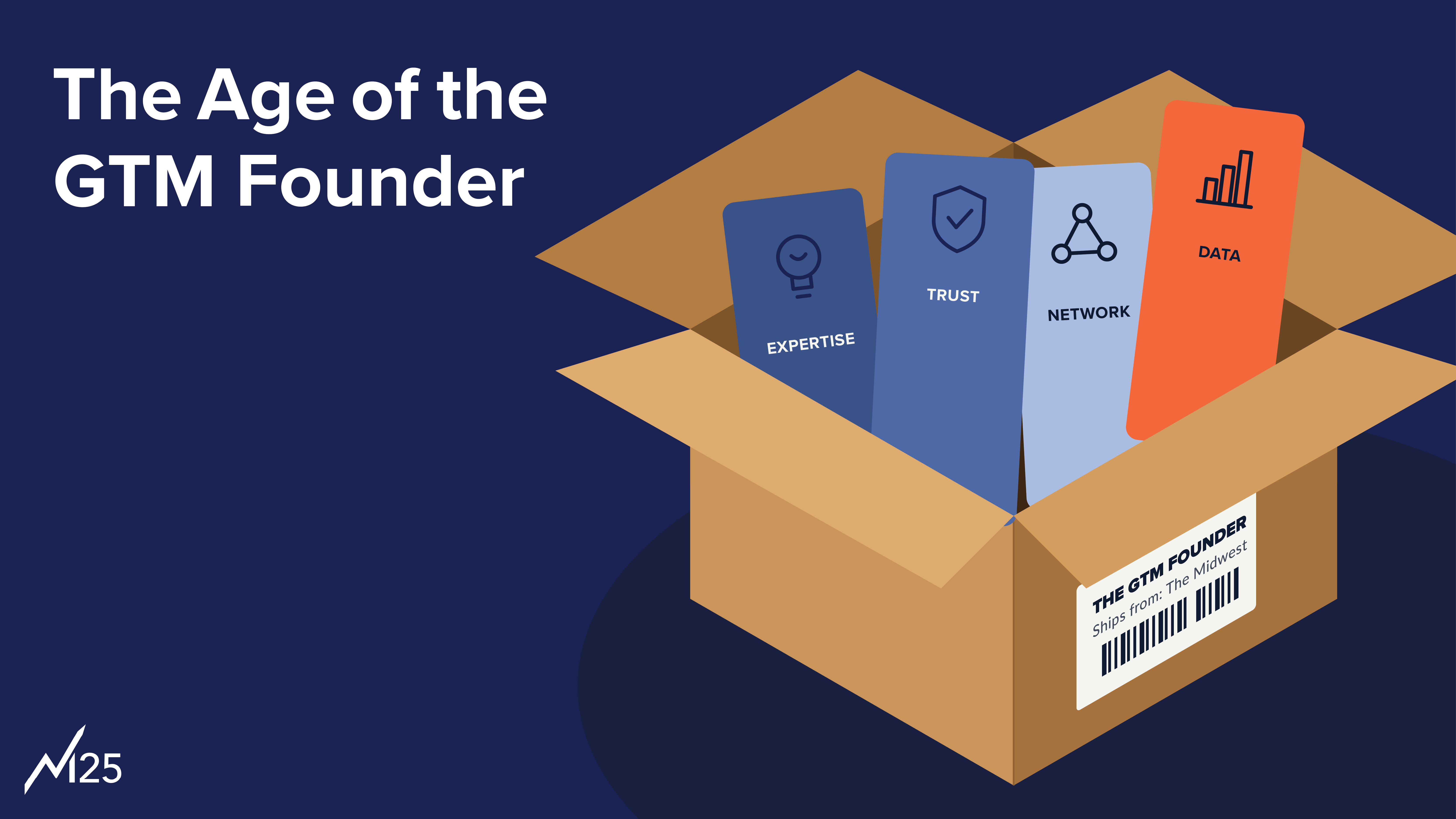
In VC, we’re often drawn to the classic founder story: the young genius works tirelessly in his college dorm room to create a technology that ultimately goes on to shake the globe. Google, Meta and Microsoft all fall into this category; they’re VCs biggest headlines, companies built off the backs of the raw technical prowess of their founders. For many, this prowess has been raised as the gold standard for what makes a good founder, and they often make headlines in accelerators like Y Combinator (YC). However, while these people are certainly capable, they’re also exceedingly rare, and focusing solely on them as the blueprint ignores an entire category of individuals who we’ve seen win in recent years.
For years, they’ve served in their family’s business, or worked their way up from entry level positions to a confident place of seniority. They’re embedded in the space, from the customers to the pain points to the politics that no ChatGPT prompt could uncover. They’re more familiar with their customers’ needs in a way that could only come from once being that same customer. Now that the age of AI has lowered the barrier of entry to build, these GTM founders have been able to pull ahead at every startup stage.

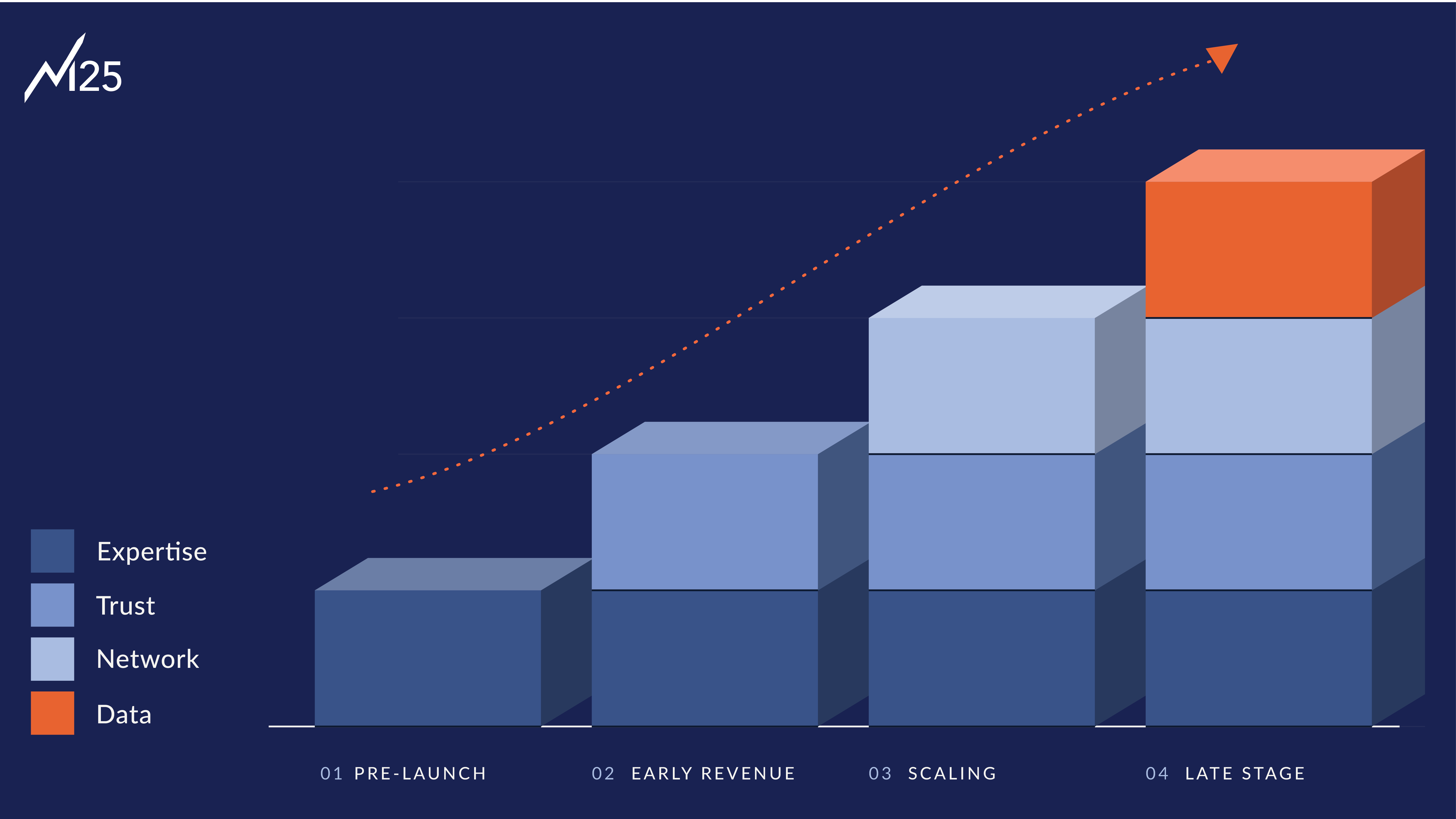
At pre-launch, the goal is building a good product that solves a real problem. At this stage, the YC founder is looking through the YC requests for startups page, analyzing McKinsey reports and asking Claude where to build and what. They have the talent, but not the experience to know what problems to solve. With the GTM founder, they’ve spent their careers building this knowledge intuitively. They already know their industry, what the major pain points are and how those problems need to be addressed. Supercrew was founded by David Peters, who started a construction company at age 18 and operated it for twenty years before building an innovative time-tracking system made for the exact job he did. There’s no guesswork required, no research needed, no Claude consulted. The legwork is already done, while the YC founder is left catching up.

Historically, companies closing their first customer has always been one of the most difficult phases of sales. There’s no rapport, no social proof and very little hope of paying the bills next month. You’re stuck convincing people to trust a product that, from the outside, has no external proof of its validity. Here, the YC founder can rely on their technical expertise more, leveraging credentials and the product itself to gain that trust. The GTM founder, however, already has it. Continuum is transforming reverse logistics for distributors and manufacturers, leveraging founder Alex Witcpalek’s experience selling into those ecosystems. Few understand the depth of ERP integration complexity like this team, and that breeds trust with customers and partners. If you’re able to go to a customer and say “I’ve lived this problem,” then you’ve done more towards winning them over than any Loom demo could, and because they know what problem to solve, this trust only leads to a concentrated ICP that loves the product.

Once the product is built, and the first customers are acquired, a startup’s goal transitions to marketing their product and expanding their customer base. Here you’ll see the YC founder pour money into advertising, or post eye-catching content online in hopes of going viral. The GTM founder, while still having to invest in these areas, has a leg up. With an ICP ecstatic about their product, they’re able to breed insane network effects. The industry is abuzz with “this is what worked for me”, leading to easy referrals, testimonials, and customers happy to sign up. Arrellio was built by Jared Noble after years working in his family’s Pearle Vision franchise business. The product originated internally before being spun out, with distribution advantage embedded from day one across industry players. This leads to a fraction of the ad spend and dramatically lower time to educate customers compared to the YC founder starting from scratch.

At the scaling stage, all of the GTM founder’s advantages come together. With their wealth of experience, the trust they’re able to instill in others, and the network they can rely on, they’re able to build faster and acquire data about their customer, the product, and the space quicker. This only leads to iterations of better and better products. Luke Buchanan and his team at Redi Health came from successfully selling into the same pharma industry at CoverMyMeds. Now, they have so much scale that they know more about patients, billing, side effects, and adherence than any new horizontal entrant could try and replicate. At this stage, even if a large player can massively outspend Redi, it would still lead to an inferior product due to the wealth of data they have access to. At scale, the benefit is only exponential as it’s that proprietary data that can be used, with proper data rights, to train an LLM to specialize in niche industries, allowing it to target customer needs far more thoroughly than any competitor’s. From there, the product improves, customer count increases, more data is attained, and the cycle continues.
The advantages of the GTM founder are clear, and when thinking about where to find them, it makes sense for them to come from the same regions where their career industry is based. For the GTM founder, those industries tend to be core backbones of the American economy, industries like manufacturing, insurance, supply chains, and infrastructure. The coastal hubs, where venture capital has consolidated, are unlikely to have a large presence of these industries; where they’re really located are regions like the Midwest, in cities like Bloomington MN, Grand Rapids MI or Columbus OH. That’s where you find these industries and that’s where we’ve seen the GTM founder truly thrive.
The technical founder used to have a wide moat: their genius allowed them to build what others could only dream of, and there’s no doubt that they’ll continue to change the world. However, with AI allowing more people to build a product, the moat for most startups has become experience: do you know what your customers actually want? Can you develop a relationship with your customers to where they refer you to their peers and even competitors? These are the primary issues for so many founders, yet the GTM founder barrels past them with ease. It's not uncommon for us to find a GTM founder raising their first $1M round with 10-20 customers and $100K-$300K of ARR live. That traction advantage continues in every round, leading to more efficient scaling and less risk at every stage. In our most recent Fund (Fund IV), GTM founders have an average round size of $1.25M and on average $21K/month in recurring revenue at the time of investment. This is almost always their first round (outside of minimal friends/family/personal capital) and they are already doing a quarter million in annualized revenue when they raise their first pre-seed round.
As VC continues to become a crazier space with new AI advancements every week, it’s these founders who we’re betting on at M25 to use their experience to create something truly great.
About M25: M25 is an early-stage software-focused venture firm based in Chicago, investing solely in tech startups headquartered in the Midwest. Since launching in 2015, M25 has become the most active investor in the region, quickly becoming the preferred seed investor for the next generation of Midwest unicorns. Portfolio companies include Kin Insurance, Loop Returns, Astronomer, Branch Pay, Authenticx, Redi Health, Continuum AI and more.


